Commodification of Black music
Ma Rainey's Black BottomCommodification of Black music in Ma Rainey's Black Bottom is not an abstraction removed from performance: it unfolds through the microphone, the recording booth, the song choice, and the money offered for work. Sturdyvant and Irvin treat Black music as a product to be adjusted for a market, while Ma Rainey and Levee Green confront the gap between creating value and controlling how that value is recorded, sold, and paid for. The play makes that gap visible in two distinct struggles: Ma’s defense of her voice and standing, and Levee’s thwarted attempt to turn his compositions into recordings.
The Recording Business and Its Market
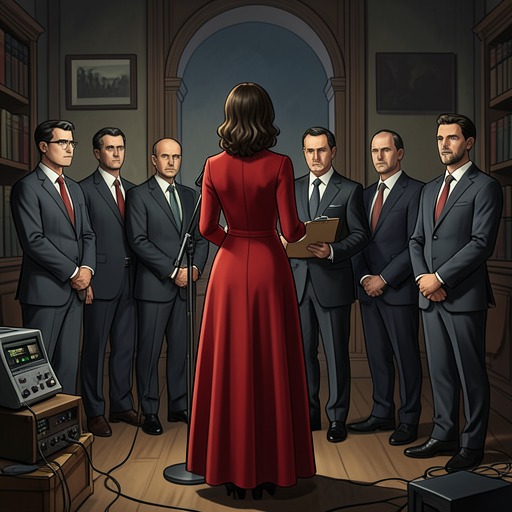
The studio’s physical arrangement gives the commercial relationship a visible shape. The performers work upstairs in a late-1920s recording studio, while the control booth sits at the rear, reached by a spiral staircase. A horn carries communication between the control room and the musicians. In the opening scene, Irvin tests the microphone and Sturdyvant listens from the booth on earphones. The setup separates those who perform from the person monitoring the recording, and makes recording technology part of the play’s account of who can listen, direct, and assess the music.
Sturdyvant’s talk of the market is both practical and revealing. He wants to hear more of Levee Green’s sound because times are changing and recordings need something different, wild, and rhythmic. At the same time, he calls the company’s previous output garbage and dwells on how few records sold in New York, pointing out that Harlem is part of the city. Irvin counters with sales in Memphis, Birmingham, and Atlanta and the money those markets brought in. Their exchange measures music by sales, while exposing the difference between a disappointing market figure and a profitable business overall.
Sturdyvant also presents the business as a strain he hopes to leave behind. He says he cannot sleep, that his wife wants him to slow down and take a vacation, and that he plans to leave in two years for the respectable business of textiles. His anxiety does not erase his authority over the performers’ work: he remains the person deciding what the company will record and what it will pay. The contrast between his private complaints and the musicians’ dependence on company decisions underscores how unequal control persists even when the person in charge describes himself as burdened.
Ma Rainey’s Voice and Authority
Ma Rainey understands that the company wants her voice as a commercial asset, not necessarily her presence or judgment. She objects to Sturdyvant trying to dictate how long she should wait before coming in on the song. Her answer draws a boundary between the control booth and the performance: he can manage what happens up there, but she will decide how to sing down here. She then asks for her Coca-Cola. The small, concrete demand sits beside the larger assertion of authority; she will not let the recording process make her compliant about either the music or the conditions of her work.
Her complaints connect that authority to a history of being undervalued. Ma says she has performed since she was a little girl and rejects the implication that Bessie Smith’s success diminishes her own: she taught Bessie and insists that each singer has a separate audience. She recalls being too often treated cheaply, including the refusal to provide a Coca-Cola that costs only a nickel. The company wants to trap her voice in recording equipment, she says, while failing to treat her as a person whose demands deserve attention.
Ma describes the recording transaction as a one-sided use of her labor. In her view, the people behind the session want her voice on their machines and may have no further use for her once they have captured it. She says Irvin has managed her for six years and spoken of sticking together, but that the only time he had her in his house was to sing for his friends. She also claims that her records have made the company more money than all its other recording artists combined, yet the company still complains about the session’s cost. Her speech therefore joins personal grievance to a clear economic accusation: the company profits from her work while resisting the costs and obligations of treating her fairly.
Payment, Leverage, and Recognition
The dispute over Sylvester Brown’s pay makes the division between a performer’s labor and the company’s proposed payment explicit. Irvin tells Ma that Sturdyvant’s best offer is to take twenty-five dollars from her own money and give it to Sylvester. Ma refuses the arrangement: if she wanted to give him her money, she could do so herself; he is supposed to receive his own pay like everyone else. Her objection is not simply to the amount but to the company’s attempt to recast its payment obligation as a deduction from her earnings.
Ma uses the leverage available to her as an established recording artist. She orders Irvin to return to Sturdyvant and warns that he will not make another record of hers if Sylvester is not paid. When Sturdyvant comes into the studio, she repeats her demand directly. He then provides two hundred dollars for Ma and twenty-five dollars for Sylvester, with the money passing through Irvin to them. The episode shows Ma converting the prospect of withheld future recordings into bargaining power, while also making clear that Sylvester’s payment does not arrive without her intervention.
After the payment, Ma signs the forms and warns Sturdyvant that another mistake could lead her to make her records elsewhere. The sequence matters: she has pressed the company over the terms of payment, secured Sylvester’s money, and then signed the paperwork. The play does not present this as freedom from the company’s control; her warning instead identifies the limited but real leverage she can exert within an arrangement whose recording access and business decisions remain in Sturdyvant’s hands.
Levee Green’s Songs and the Price of Authorship
Levee Green’s conflict with Sturdyvant concerns not only compensation but the chance to have his own music recorded. Earlier, Sturdyvant expresses interest in Levee Green’s distinctive sound as a possible response to changing market tastes. Later, when Levee Green asks about the songs he gave him, Sturdyvant says the company does not think people will buy them and that they are not the kind of songs it wants. Levee Green points out that Sturdyvant had asked him to write them and had said they could be recorded. He asks what changed between that promise and the refusal.
Levee Green argues that Sturdyvant has not heard the songs played as they are meant to sound. He has chosen a band and believes the musicians can make the music exciting; he wants to record the songs, not accept a payment for surrendering them. He describes listeners as tired of jug-band music and wanting something with fire, insisting that his own playing would bring the compositions to life. His case is both artistic and economic: the company is judging the songs without hearing his intended performance, and its refusal prevents him from testing his belief in their appeal with an audience.
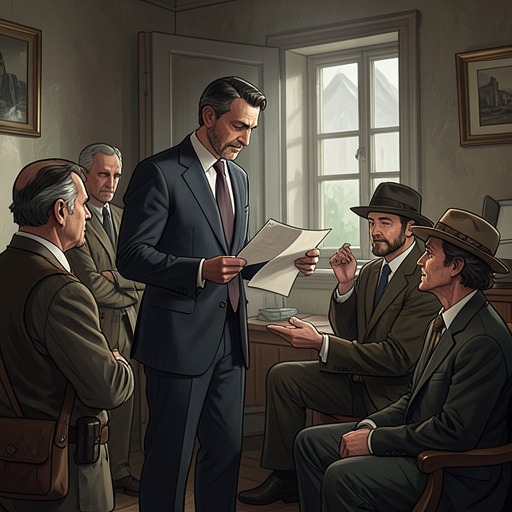
Sturdyvant’s final offer fixes the exchange at five dollars per song. He calls the payment a favor and says he will take any future songs off Levee Green’s hands at the same price. When Levee Green refuses the money and repeats that he wants to record the songs, Sturdyvant shoves the cash into his coat pocket and leaves. The door slams in Levee Green’s face. He removes the money, balls it up, and throws it on the floor; the other musicians silently gather their belongings. The sequence turns the proposed purchase into a physical rejection: money is offered in place of the promised opportunity to perform and record, and Levee Green refuses to treat that substitution as equivalent.
History, Race, and the Meaning of Value
The play’s account of commercial extraction is sharpened by Toledo’s image of Black people as the leftovers from history. He tells the musicians to imagine different African peoples mixed together into a stew, whose ingredients remain as leftovers even after a new history has been made from them. In his explanation, Black people are those leftovers: white people have consumed what they needed and now want them out of the way. Toledo’s metaphor frames exploitation as a historical process in which Black labor and culture have already contributed to the making of a society that denies their makers equal recognition. Slow Drag questions how the image explains white treatment, leaving the metaphor open to debate among the musicians rather than turning it into an uncontested formula.
Cutler’s story of Reverend Gates gives that argument a specific human cost. Traveling to visit his sick sister, Reverend Gates is stranded when his train leaves without him. A group of white men crowd around him, ask who he is, and then demand that he dance. They tear the cross from his neck, destroy his Bible, and make him dance until they tire of watching. Cutler says that dancing was the only way Reverend Gates got out alive, and connects the story to the way white people can use Ma Rainey to make money. The tale joins racial violence and coerced performance: even a minister’s identity and sacred objects cannot protect him from being forced into a spectacle for white men.
Together, Ma Rainey’s demands and Levee Green’s refusal expose different limits of the recording economy. Ma can make the company pay Sylvester Brown and threaten to take her future recordings elsewhere, but she must repeatedly insist on respect from people who profit from her voice. Levee Green can claim authorship and describe the sound he intends, yet Sturdyvant controls whether the company will record it and offers only a fixed price to take the songs away. By placing these disputes beside stories of racialized exclusion and historical consumption, the play presents commodification not merely as the sale of music, but as a struggle over who determines its value, who receives its proceeds, and whether its creators retain any say in what becomes of it.